


Coming soon: TMJ and jaw pain physiotherapy is not available at Abound yet, but it is coming soon. In the meantime, please see your GP or dentist. This guide is general information only.
Temporomandibular disorders (TMD) cover pain and problems in the jaw joint and the muscles that move it. After low back pain, it’s the most common musculoskeletal pain condition. It’s about four times more common in women, and peaks between 35 and 44.
Common symptoms include:
The take-home
Most jaw pain is very treatable without invasive procedures. Rest position, habit changes, hands-on treatment, the right exercises and looking after the neck make a big difference.
In this article
- Pain in front of the ear, in the jaw or the temples
- Clicking, popping or grinding noises
- Difficulty opening wide, yawning or chewing tough food
- The jaw catching or locking
- Headaches, especially at the temples
- Ear fullness or ringing, or teeth that feel sensitive with no dental cause
What causes it?
Usually a combination of things:
- Injury or strain: a long dental appointment, intubation for surgery, a knock to the face, or biting into something very hard
- Habits: clenching or grinding (day or night), chewing gum, biting nails, pens or cheeks
- Background factors: genetics, hormones, poor sleep, other pain conditions, and stress
For most people it comes and goes. Recurrences are common, which is why learning to self-manage matters.
Muscle or joint?
TMD can be grouped into two broad groups (and many people have a bit of both):
Muscle-related pain
Achy, tender jaw and temple muscles, often worse with chewing, talking or clenching. It can refer pain to the teeth, ear or head.
Joint-related problems
- Joint pain right in front of the ear
- Clicking: often the small disc inside the joint sits a little forward when your mouth is closed and pops back into place as you open. Clicking on its own, without pain or locking, is common and usually not a concern.
- Closed lock: the disc doesn’t pop back in, so you suddenly can’t open fully, and the click often disappears
- Open lock: the jaw gets stuck open and you have to manoeuvre it to close
- Arthritis: grinding or crunching sounds, more common with age
Interestingly, the disc itself has no nerves. Pain usually comes from the tissues behind and around it, the joint capsule, and the muscles.
How much should my jaw open?
A healthy jaw opens about three fingers wide (40 to 50 mm). It should also move about 8 to 12 mm to each side and slide forward so your bottom teeth come in front of your top teeth.
Don’t forget the neck
The jaw and upper neck are closely linked through shared nerves, muscles and posture. People with significant jaw problems often have neck problems too. A thorough assessment always includes the neck, and treating the neck often helps the jaw.

What helps
Jaw rest position and habits
The ideal resting position is: lips together, teeth apart, tongue resting gently on the roof of your mouth just behind the front teeth. Check in with this during the day, especially when you’re focused or stressed. Cut back on gum chewing, nail biting and pen chewing.
Hands-on treatment
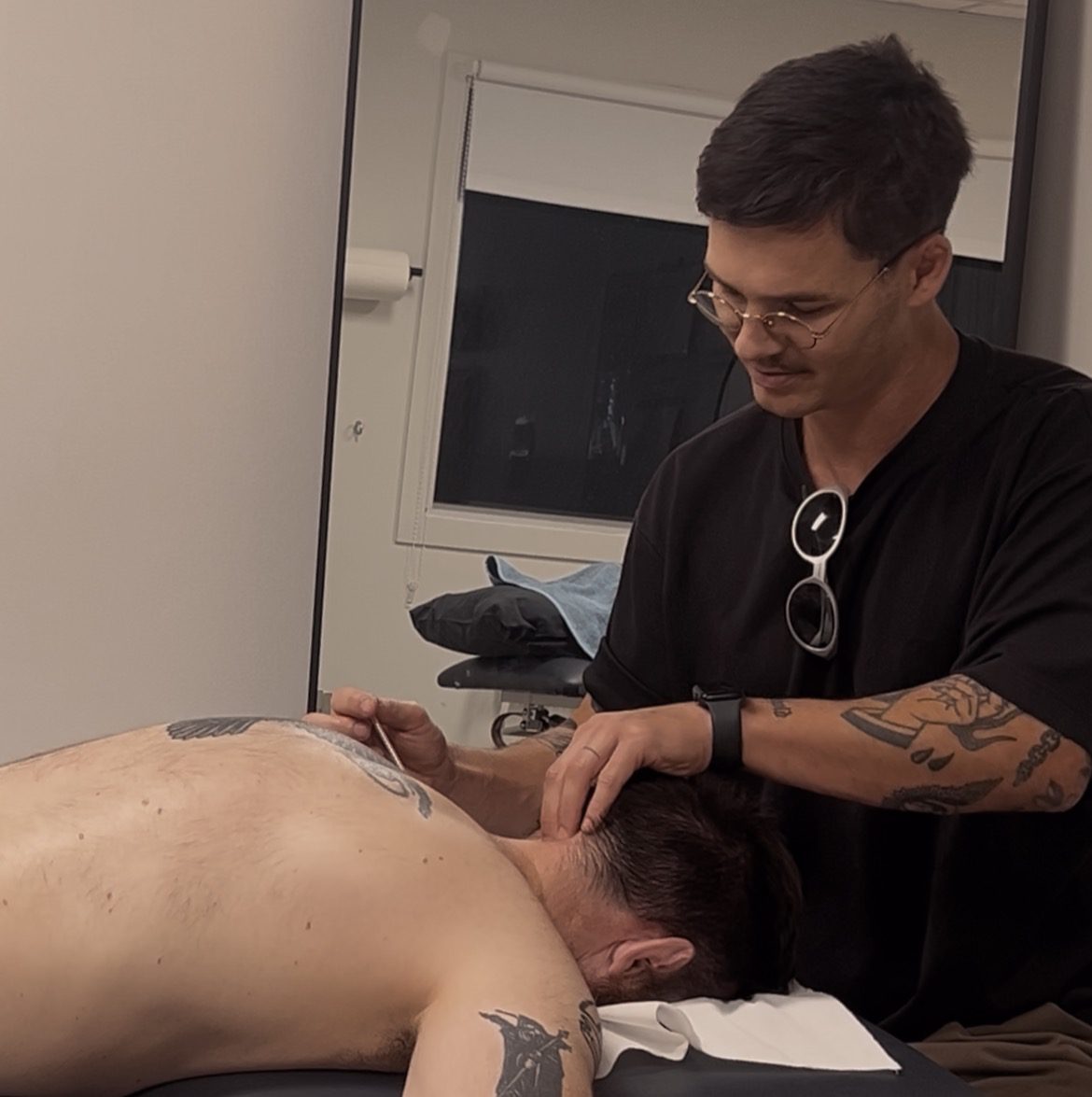
Releasing tight jaw and temple muscles (inside and outside the mouth), gentle joint mobilisation, and treatment for the upper neck. Dry needling can help some people with muscle pain when combined with exercise.
Exercise
- Controlled opening with the tongue on the roof of the mouth
- Gentle resisted holds in different directions
- Side-to-side and forward movements, staying short of the click or pain
- Mirror work to keep the jaw moving in a straight line
- Neck and upper back exercises, plus relaxed breathing
Combining hands-on treatment with exercise and habit changes tends to work better than passive treatments or a splint alone.
Splints
Night splints are useful to protect your teeth if you grind, and can help reduce load on the joint. On their own, though, they aren’t better than exercise for long-term pain relief.
Medical options
Your GP or dentist may suggest short-term anti-inflammatories, or other medication for nerve-type pain or severe night-time clenching. For stubborn cases, Botox, joint washouts (arthrocentesis) or surgery are options, but they’re rarely needed and work best alongside rehab.

When to get checked by a doctor
Jaw pain that comes on with exertion (which can be heart-related), jaw pain on chewing with headache and visual changes in older adults, signs of infection, unexplained weight loss, or a sore in the mouth that won’t heal all need prompt medical review.
Need help with jaw pain? TMJ and jaw pain physiotherapy is not yet available at Abound. Please speak with your GP or dentist about assessment and care now.
This article is general information only and isn’t a substitute for personalised advice. If you’re unsure about your symptoms, speak with your GP or dentist. If you have severe or rapidly worsening symptoms, seek urgent medical care.