
Hip & Groin Pain
Ready to move without that pinching, catching, or deep groin ache?
Whether you are a weekend warrior wanting to get back on the field, trying to safely prevent surgery, or recovering from a recent operation; we have the hands-on expertise, clinical science, and advanced equipment to get you there.
Download our Hip & Groin Pain Guide
ON THIS PAGE
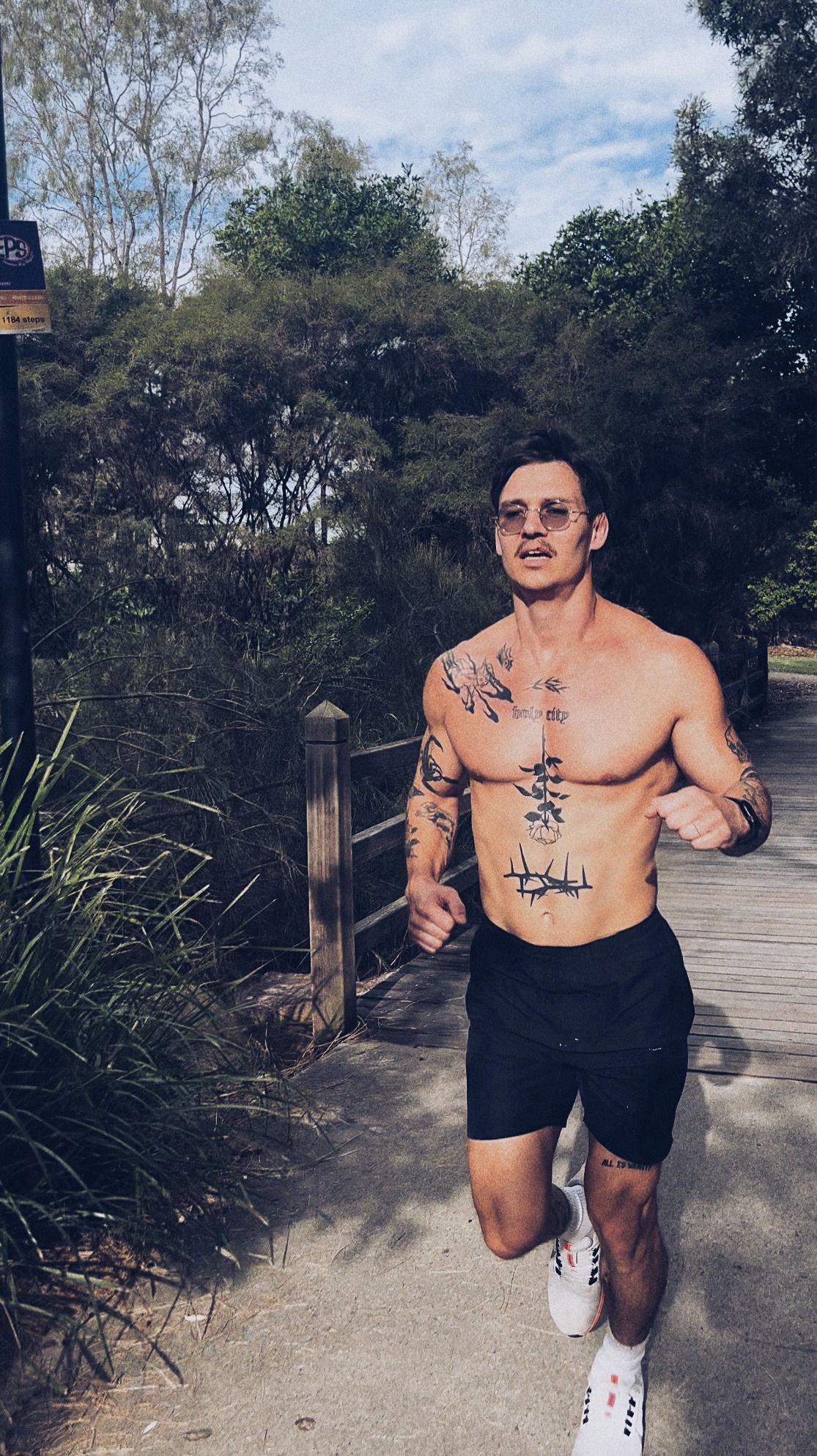
Mitchell Robinson
MSK Physiotherapist
We’ve spent countless hours treating complex hip and groin injuries, doing advanced coursework, and guiding athletes and everyday people out of pain and back to high-performance living.
Immediate Relief Meets Long-Term Strength
Hip and groin pain can feel deeply frustrating. Because the joint is deep and surrounded by multiple layers of powerful muscles and tendons, getting an accurate diagnosis is half the battle. Our clinical philosophy is simple: we get you moving comfortably today, and we build your body to stay that way tomorrow.
Quick Wins & Hands-On Relief
We don’t believe in making you wait weeks for relief. On your very first visit, we use hands-on soft tissue therapy and targeted joint mobilisations to calm down sensitive tissues, reduce muscle guarding, and restore your early range of movement.
Rebuilding Your Strength & Capacity
True recovery means making sure your hip can handle whatever you throw at it. Once we have quietened your acute pain, we design a progressive loading program to systematically rebuild the capacity of your hip flexors, abductors, and gluteals.
Returning to What You Love
- Detailed Video Biomechanics — seeing exactly how your hip stabilises when you move to find your strongest, most efficient movement patterns.
- Pain-Relieving Isometrics — triggering a natural, immediate hypoalgesic (pain-relieving) response in your nervous system.
- Targeted Joint Mobilisations — getting deep into the hip capsule to restore lost range of motion and relieve stiffness.
- Progressive Resistance Training — rebuilding the strength of your gluteals, adductors, and hip flexors.
- Performance Profiling — screening for upper limb and lower limb sports like tennis, swimming, surfing, and football.
- Confidence Building — moving beyond “pain-free” to true psychological and physical robustness.
Trusted by Mango Hill Locals


The Scan Myth: We Treat the Person
Have you been told you have a “hip impingement” (FAI), a “labral tear”, or “arthritis” on a scan? Don’t panic.
- Scans don’t tell the whole story: 69% of active, completely pain-free adults have labral tears visible on their MRIs.
- Impingement is common: 64% of asymptomatic elite athletes show clear evidence of “hip pathology” on scans, with over 50% showing hip impingement (FAI) structures despite having zero pain.
- Normal aging: Structural changes on an MRI are often as normal as getting grey hair or wrinkles. At Abound Physio, we do not treat your MRI—we treat the living, breathing presentation in front of us.
Download our Hip & Groin Pain Guide
No AI hallucinations in here. Just an evidence-based guide to get you back to what you love.
Hip & Groin Conditions We Fix
We provide expert, evidence-based care for both acute sporting injuries and longstanding, chronic grumbles:
- Joint Conditions: Hip Impingement (FAI), Labral Tears, Acetabular Cartilage Sensitivity, Hip Osteoarthritis & Joint Stiffness.
- Tendons & Muscles: Groin & Adductor Muscle Strains, Athletic Pubalgia, Gluteus Medius & Minimus Tendinopathy, Hamstring Tendinopathy & Iliopsoas (Hip Flexor) Pain.
- Other Syndromes: Greater Trochanteric Pain Syndrome (GTPS), Lateral Hip Pain, Snapping Hip & Post-Operative Rehabilitation.
Diagnosis & Management
- Accurate Diagnosis: Because the hip joint is deep and surrounded by multiple layers, finding the exact tissue at fault is crucial.
- Holistic Management: Lower back or pelvic pain can frequently refer into the hip and groin area, so getting it right the first time is key.
Whichever path you’re on, Abound Physio uses objective data to ensure your hip gets the muscular support it needs to stay healthy and robust for life.
When Can I Return to Sport & Activity?
At Abound Physio, we combine strength and conditioning expertise, objective measurement technology, and advanced hip management to build a rehab program focused on one thing: getting you back stronger, faster, and more resilient than before your injury.
Beyond Timelines: Criterion-Based Clearance
Return-to-sport decisions shouldn’t rely on arbitrary timelines (e.g., “rest for 6 weeks”). Biological healing doesn’t guarantee physical readiness. At Abound Physio, we use criterion-based testing: you progress only once your hip shows the strength, movement quality, and psychological readiness for load.
The evidence is compelling — returning before restoring adequate muscle capacity and movement confidence carries a significantly greater risk of re-injury or chronic flare-ups.
Abound’s Return-to-Activity Testing Battery
Passing your tests is the green light to begin transitioning back — not a ticket straight to competitive play. We guide you through:
1
Objective Strength Testing

Using objective dynamometry, we measure your exact force output across vital stabilising muscle groups—including your glutes, adductors, and hip flexors.
- Limb Symmetry Index (LSI): assessing your injured side against your healthy side.
- Absolute strength targets: we track hip strength relative to body mass to ensure you have the raw capacity to support the joint.
2
Functional Movement & Load Tolerance

We run a battery of functional movement assessments to analyse how you transfer load through your pelvis, hips, and lower body:
- Squatting & Hinging mechanics: high-speed video analysis checks for efficient load distribution to avoid protective guarding.
- Fatigued-state testing: since hip and groin injuries often flare up when muscles tire, we test your pelvic control after a fatigue protocol.
3
Psychological Readiness & Confidence

Confidence matters as much as strength — fear of movement (kinesiophobia) is the leading reason people with hip pain avoid the activities they love.
- Subjective readiness: tracked using validated tools to measure confidence in your hip and readiness to load.
- Reactive drills: we progress to dynamic and reactive drills to shift your motor control from conscious “guarding” to natural, automatic movement.
The Graduated Return-to-Activity Pathway
Passing your tests is the green light to begin transitioning back — not a ticket straight to competitive play. We guide you through:
- On-Field Rehabilitation: bridging linear running to sport-specific cutting, deceleration and pivoting
- Restricted Training: team drills (e.g. non-contact bib) to build fitness and skills without contact
- Unrestricted Training: full, unconstrained team training
- Lower-Tier/Practice Match Play: competitive minutes in lower-stakes games
- Full Competitive Return: back on the field at your pre-injury level
Frequently Asked Questions
True hip joint issues (like FAI or labral tears) typically present as a deep ache in the front of the hip or the groin. This pain is often aggravated by deep squatting, twisting, or pivoting. Pain on the side of the hip is more commonly related to the lateral tendons and bursae (Greater Trochanteric Pain Syndrome), while pain in the back of the hip is frequently referred from your lower back or deep gluteal muscles.
Usually, no. Because asymptomatic imaging findings are incredibly common, getting a scan early can often lead to unnecessary worry or over-treatment. We can diagnose and successfully treat the vast majority of hip and groin conditions using a systematic physical and clinical examination. If we identify any clinical “red flags”, we will coordinate with your GP to organise the appropriate imaging.
Every hip is unique, but we aim for rapid symptom relief within your first 2 to 3 sessions using hands-on techniques and pain-relieving isometrics. Building true tissue capacity and muscle hypertrophy to safely return to heavy sports or high-demand daily tasks typically takes a structured block of 6 to 12 weeks of progressive loading. We set clear milestones from day one so you always know exactly where you stand.

Ready to get back to your best? Don’t let a sore hip shrink your world
Take the first step toward moving freely again with an empowering, evidence-based recovery plan.
Hip and groin: what we look at
- Hip osteoarthritis: education and progressive strengthening are the first-line treatment, and many people avoid or delay surgery. We build strength over about 6 to 12 weeks, then reassess.
- Side-of-hip pain (gluteal tendinopathy): compression of the tendon from crossing legs, standing on one hip or lying on the sore side often keeps it irritated. Loading starts gently and builds over months.
- Athletic groin pain: usually needs both hip and trunk strength, then sprint and kick or cut progressions before full return.
- Hip impingement and hip dysplasia: sometimes surgery is needed, but exercise-based rehab is a sensible first step for most people. We will tell you when we think imaging or a surgical opinion is worthwhile.
Join hundreds of
happy
patients

Find Us
Shop 7, Capestone Village
67 Capestone Blvd, Mango Hill QLD 4509
Opening hours
Monday and Wednesday: 7:30 am–7 pm
Tuesday and Thursday: 7:30 am–8 pm
Friday: 7:30 am–4:30 pm
Saturday: by request
Sunday: closed
Contact Us
Call: (07) 2150 0505
SMS: 0468 054 699
E: info@aboundphysio.com
Follow Us
Find our clinic at Capestone Village. Physio Mango Hill · Physio North Lakes · Physio Griffin. We also welcome patients from Rothwell, Deception Bay and Kallangur.
Disclaimer
Every body is unique, and so is every recovery journey. While the team at Abound Physio is dedicated to supporting your health, mobility, and wellbeing, specific results will vary from person to person and cannot be guaranteed. Please speak with one of our qualified physiotherapists for advice tailored to your individual needs.